Making fitness feel less lonely.
FitPoints, visible progress, and small community challenges to help users return.
01 / THE PROBLEM
What needed to make more sense?
VitaFit users begin classes but struggle to return consistently. The brief centers on fading motivation, limited visible progress, and the missing social connection of an offline fitness group.
02 / DISCOVERY
How I approached it
- Defined audiences including working professionals aged 22–35, Gen Z beginners, lapsed first-session users, and people missing an offline community.
- Connected the proposed features to repeat bookings and longer-term retention.
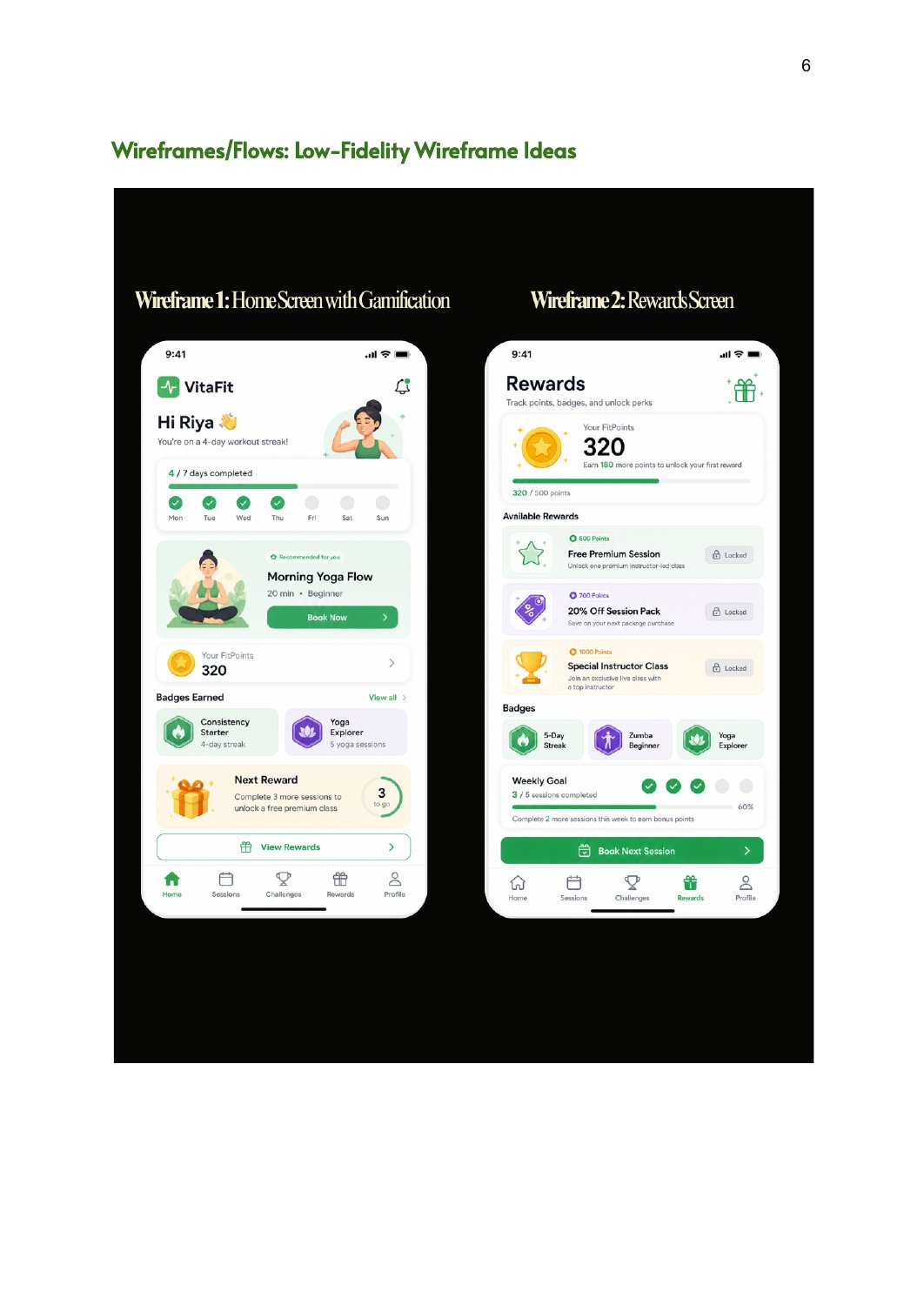
- Documented core flows, low-fidelity wireframes, a phased experiment, and a ten-week plan.
03 / PRODUCT DECISIONS
The proposed direction
- Gamification & Rewards: earn FitPoints for completed sessions, streaks, new formats, weekly goals, and challenges.
- Show progress, badges, points, and upcoming rewards after workouts.
- Community Challenges: small themed groups such as a seven-day yoga reset, with instructor check-ins and shared progress.
- Roll out through research, scoping, wireframes, MVP, QA, a selected-user beta, feedback, and a launch decision.
04 / MEASURES & LIMITS
What success would look like.
The targets are proposed success measures, not achieved results. The source also aims for 40%+ challenge completion and a 10% improvement in 30-day retention. Repeat-session rate is the primary evaluation signal.
05 / THE TAKEAWAY
The thought I’d carry forward.
Reward activity that supports a fitness habit. Community accountability and visible progress should make the next session easier to choose, with the beta used to learn which mechanism works.
06 / ALL THE DETAILS
The original work, in full.
The complete research, diagrams, screens, and supporting details are in the original document.
If the document preview is unavailable, use “Open the complete case study” above.